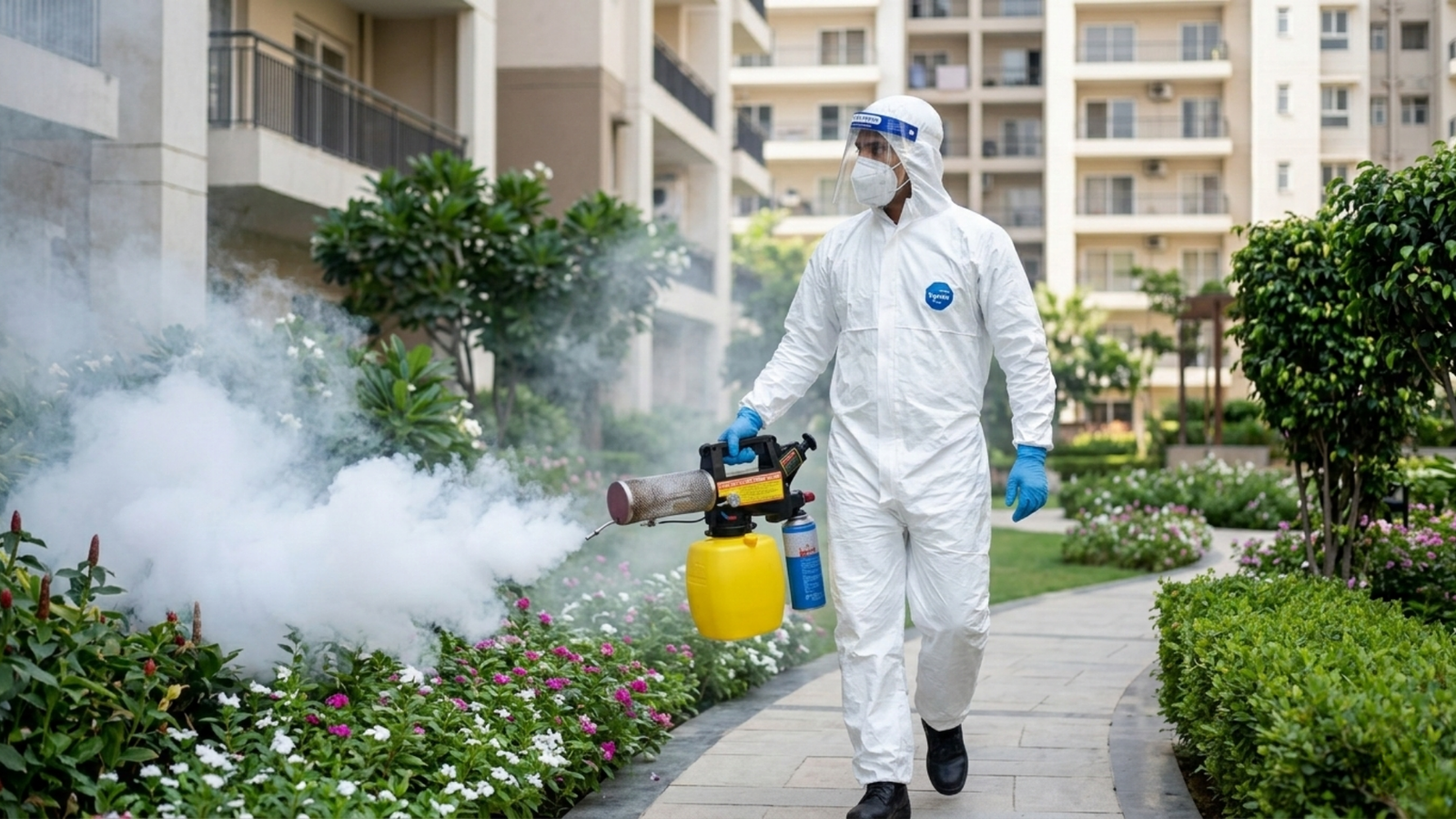
Mosquito-borne diseases such as dengue, malaria, and chikungunya require structured vector control programs. Selecting the right fogging technology plays a critical role in achieving effective coverage, chemical efficiency, and rapid knockdown results.
Understanding ULV Fogging
Ultra Low Volume (ULV) fogging machines produce fine droplets typically ranging between 5–30 microns. These droplets remain suspended in the air for longer durations, allowing uniform coverage in enclosed and semi-enclosed environments.
- Ideal for indoor applications
- Lower chemical consumption
- Controlled droplet size
- Suitable for hospitals, offices, and residential areas
ULV fogging is commonly used in infection management programs and indoor mosquito control where precision and safety are essential.
Understanding Thermal Fogging
Thermal fogging machines use heat to create dense fog by vaporizing a solution, forming visible smoke-like clouds. These droplets are extremely fine and provide rapid knockdown in outdoor areas.
- Effective for large outdoor areas
- Fast mosquito population reduction
- Suitable for municipal drives
- Visible fog improves coverage monitoring
ULV vs Thermal Fogging: Key Differences
ParameterULV FoggingThermal Fogging
Best Use | Indoor & controlled environments | Outdoor & large open areas
Chemical Usage | Lower | Moderate
Visibility | Low visible mist | High visible fog
Control Precision | High | Medium
Which One Should You Choose?
The choice between ULV and thermal fogging depends on the application environment, scale of operation, and vector control objectives.
Municipal corporations often deploy thermal fogging for rapid outdoor coverage, while hospitals and commercial facilities prefer ULV fogging for structured infection-control programs.
A combined approach using both ULV and thermal fogging can deliver optimal vector management results across urban and rural areas.